Phone : +91-8669609001
Email : [email protected]
Phone : +91-8669609002 /+91-832-2451576
Email : [email protected]
Goa University is situated on the Taleigao Plateau in North Goa, within the coastal State of Goa on the western coast of India. The University campus is strategically located near the State capital, Panaji, and is surrounded by a unique combination of coastal, riverine, lateritic plateau and Western Ghats ecosystems. Goa receives high monsoonal rainfall, has a coastline of approximately 160 km, numerous rivers and estuarine systems, and rich biological diversity. The University's geographical setting provides an exceptional "natural laboratory" for multidisciplinary teaching, research and innovation in areas such as environmental science, marine and coastal studies, biodiversity, climate change and sustainable tourism. Its proximity to the Arabian Sea, Mandovi and Zuari river systems, the Western Ghats, and diverse terrestrial and aquatic habitats offers significant opportunities for field-based education, collaborative research and community-oriented sustainability initiatives.
Students can use these ecosystems for field studies, internships, dissertations and experiential learning in areas such as biodiversity, botany, zoology, earth science, microbiology, marine biotechnology, marine science and climate change. Faculty and researchers can develop multidisciplinary research programmes addressing locally relevant challenges while generating high-quality publications, patents and technologies. Government departments and local authorities can collaborate with the University to develop evidence-based policies and solutions for coastal management, water security, biodiversity conservation, climate resilience, waste management and sustainable tourism. Industries and start-ups can use Goa as a testing ground for technologies related to renewable energy, water purification, environmental monitoring, waste-to-resource systems, the blue economy and sustainable tourism, thereby creating new opportunities for entrepreneurship and employment. Local communities and Panchayats can participate in citizen-science initiatives, biodiversity documentation, watershed management, rainwater harvesting, sustainable agriculture and environmental conservation.
Goa's multicultural society is characterized by religious pluralism, linguistic diversity, Indo-Portuguese cultural synthesis, shared festivals, maritime history, distinctive cuisine, rich musical traditions and a cosmopolitan outlook. Together, Goa's multicultural society and diaspora constitute an important social and cultural asset for the State's sustainable and globally connected development. Disciplines such as Sociology, Political Science, International Studies, Linguistics and History can contribute to understanding and documenting these dimensions, including Goa's multicultural heritage, social transformation, migration and diaspora linkages.
There is also considerable scope to analyse the State's economic drivers and the relationship between conventional sectors and their emerging trends, such as Tourism–Sustainable Tourism, Iron-ore Mining–Green and Circular Economy, Construction–Knowledge Economy, Traditional Fisheries–Blue Economy, Hospitality–Medical and Wellness Tourism, Trade–Logistics and Maritime Services, Remittances–Diaspora Investment, and Agriculture–Agri-tech and Agro-processing. Disciplines such as Management, Economics & Commerce, Artificial Intelligence and Data Science, Law and Public Policy can work together to analyse these transformations and develop innovative solutions and opportunities in these sectors.
The University can also establish collaborative field laboratories with neighbouring institutions such as NIO, NCPOR, IIT-Goa, BITS-Goa, NIT-Goa and ICAR-CCARI, enabling shared infrastructure, expertise and large-scale research programmes. The integration of modern technologies such as IoT, Artificial Intelligence, GIS, remote sensing, robotics and digital twins can further strengthen this ecosystem.
Such an approach would transform Goa University from an institution that merely conducts research "about Goa" into an institution that conducts research "in Goa, with Goa and for Goa", making the University a nationally and internationally recognized living laboratory for sustainable development, innovation and community engagement.
With warm regards and sincere best wishes,
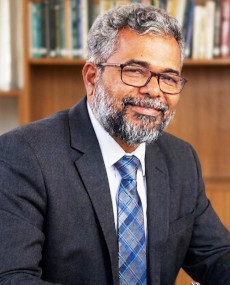
Prof. Rajendra Soiru Gad
Vice Chancellor
Goa University
Goa, India